
When research needs to leave the campus
Imagine a university alliance meeting where researchers, students, local organizations, public institutions, and entrepreneurs are discussing the same question:
How can knowledge become useful beyond the university walls?
Everyone agrees that research matters. But the real challenge is different: how do we turn scientific knowledge into practical solutions that communities, businesses, and policymakers can actually use?
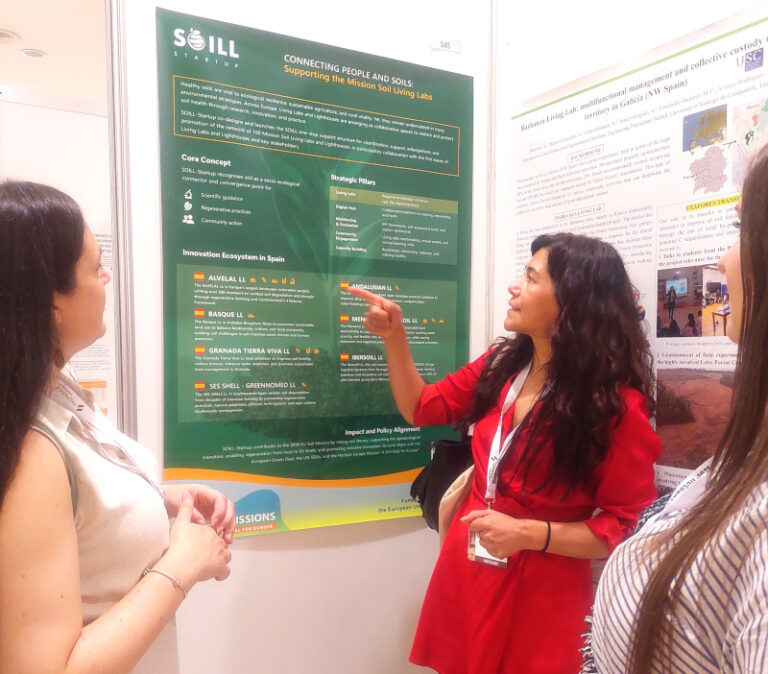
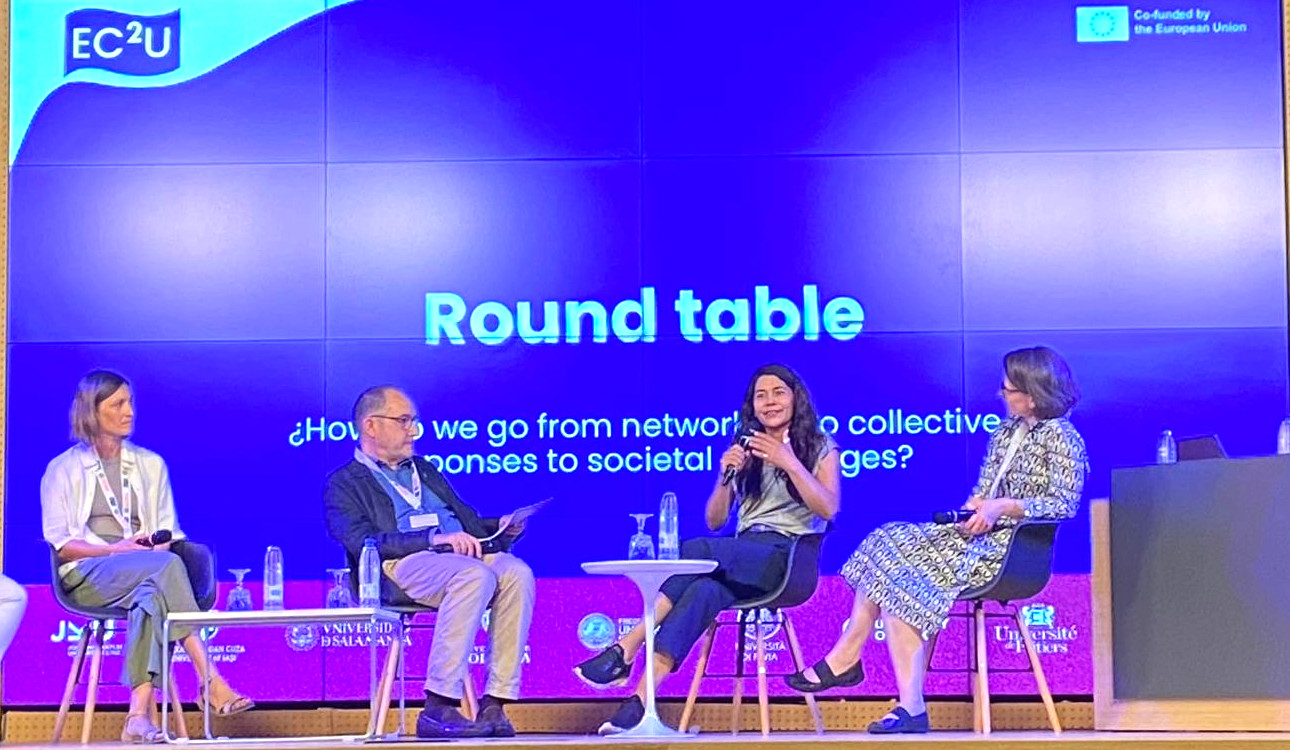
That is the message behind the EC2U Round table on “Universities Empowering Living Labs”, which highlights the role of universities in scientific validation, technical training, digital tool development, PhD exchanges, student mobility, and partnerships that strengthen innovation ecosystems.
Why Living Labs matter
Living Labs are not traditional research projects. They are real-world spaces where people test, adapt, and improve solutions together.
For small businesses and entrepreneurs, this matters because innovation often fails when it is designed far from the people who will use it. A digital tool, sustainability strategy, or AI solution may look promising in theory, but it only becomes valuable when tested in practice.
Living Labs help close that gap.
They connect research with impact, education with practice, and partnerships with innovation ecosystems. This is responsible innovation in action: not innovation created in isolation, but innovation shaped with users, communities, and local realities.
Universities as facilitators, not just knowledge producers
One key lesson from the material is that universities are pivotal not only as centers of knowledge, but also as facilitators of inclusive, science-driven innovation.
This shift is important.
A university is no longer only a place that produces research papers. It can also become a bridge between science, society, and business. It can validate ideas, train practitioners, support digital transformation, and help communities adopt sustainable solutions.
For entrepreneurs, this creates opportunities. Universities can become partners in testing new models, improving products, building skills, and accessing networks that small businesses may not have alone.
Collaboration is the real infrastructure
The EC2U Round table emphasizes that strong partnerships, cross-disciplinary collaboration, and active engagement with society are essential. It also highlights that harmonization enhances collaboration, alliances enable scaling and adaptation, and knowledge transfer drives responsible innovation.
This is a practical lesson for any innovation ecosystem.
A good idea is not enough.
A strong technology is not enough.
A talented team is not enough.
To scale impact, organizations need shared methods, trusted partners, and channels for learning across regions and sectors.
This is especially relevant for AI and sustainability. Responsible AI requires more than technical expertise. It needs ethicists, users, businesses, policymakers, educators, and communities working together. AI for Good becomes meaningful when collaboration helps ensure that technology solves real problems without creating new inequalities.
Digital tools should support human learning
The discussion also points to digital tool development as a key role for universities. This is where AI for Sustainability can become especially powerful.
Digital platforms, data systems, and AI tools can help Living Labs monitor progress, share knowledge, connect stakeholders, and evaluate impact. But the goal should not be technology for its own sake.
The best digital tools make collaboration easier. They help people learn faster, compare experiences, and adapt solutions to local needs.
For small businesses, this means digital innovation should be practical, accessible, and connected to real decisions.
Practical lessons for practitioners
First, build partnerships before scaling solutions. Innovation spreads faster when trust already exists.
Second, bring different disciplines together. Sustainability challenges are rarely only technical or only social; they are both.
Third, involve society early. Communities, businesses, and users should help shape solutions, not only receive them.
Fourth, connect education with practice. Students and PhD researchers can become powerful contributors when learning is embedded in real-world projects.
Finally, use digital tools to strengthen—not replace—human collaboration.
Closing takeaway
Living Labs show that innovation becomes stronger when universities, businesses, students, and communities work together in real contexts.
The key takeaway is clear: universities can amplify responsible innovation and responsible AI when they move from producing knowledge to enabling shared action.