
Something wild is happening at the intersection of technology and accountability. The conversation around responsible AI has gone from a niche concern in ethics committees to something regulators, researchers, and even engineers can no longer ignore. As someone who has spent years studying how organisations adopt emerging technologies — and what goes wrong when they don’t — I find these three stories both clarifying and urgent.
- The EU AI Act’s First Real Teeth — and What They Mean for Research
The EU AI Act is one of those game changer moments that tends to arrive quietly in the form of legislation and only becomes wild in retrospect, when you realise the whole ecosystem has shifted around it. What started as a proposal in 2021 has now entered active enforcement, with national competent authorities across EU member states responsible for overseeing compliance with the world’s first comprehensive AI regulatory framework.
What makes this story important for researchers is that the law doesn’t just set limits — it creates obligations. High-risk AI systems now require transparency documentation, bias audits, and human oversight mechanisms as a matter of law, not just good practice. The August 2026 deadline for provisions around general-purpose AI models means that this is not a game changer on the horizon; it is already the terrain we are operating on. For any institution developing AI tools applied to health, employment, or public safety, the implications are immediate.
The wild part is that compliance, properly understood, is also a research agenda. How do you make an AI system genuinely explainable, not just legally defensible? How do you audit for bias in a model trained on agricultural data from Tunisia and Spain simultaneously? These are the kinds of questions that make responsible AI research not a constraint on innovation, but its most interesting frontier. - When Algorithms Discriminate — The Landmark Ruling on Facebook’s Ad System
One of the most striking developments in applied AI ethics recently has been a legal finding — not an academic paper, not a white paper, but a court ruling — that an algorithmic system constituted direct discrimination. The case centred on how Meta’s advertising algorithm served job and housing ads, finding that the system perpetuated gender bias by learning from historical patterns in user behaviour.
This is a game changer not because algorithmic bias is new — it isn’t — but because the ruling moved the conversation from “this is theoretically possible” to “this is legally actionable.” Companies can no longer claim ignorance of their systems’ inner workings as a defence. The wild implication is that the burden of proof has inverted: you now need to demonstrate your system is fair, not wait for harm to emerge.
From my own research on responsible innovation in SMEs, I have seen how organisations tend to adopt technology first and ask ethical questions second. The diffusion of innovations model I used in my doctoral work predicts exactly this pattern — early adopters optimise for speed and competitive advantage; the reckoning comes later. What the Facebook ruling suggests is that “later” is now arriving faster than the technology adoption curve expected.
For AI researchers, the lesson is methodological: fairness-aware design and continuous auditing cannot be retrofitted. They need to be built into the research design from the beginning — which is precisely what responsible AI as a discipline demands. - AI-Optimised Carbon Farming — When Responsible Design Meets Planetary Stakes
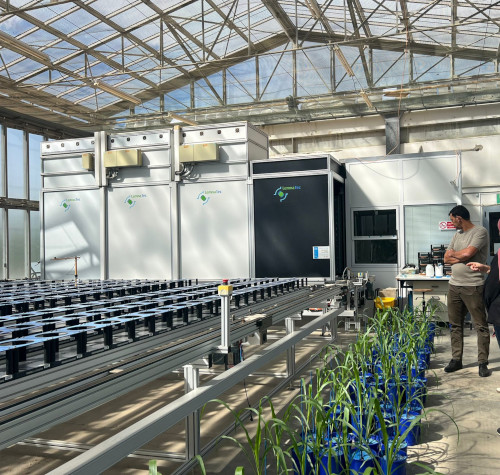
The third story is closer to my own work, and in some ways the most hopeful. The emergence of AI tools that support smallholder farmers in measuring, reporting, and verifying soil carbon sequestration — what is often called digital MRV (monitoring, reporting, verification) — represents a genuinely game changer application of AI in the climate space. But it is also wild in its complexity: the same tools that could empower women farmers in Egypt’s Nile Delta or marginalised communities in rural Spain can also exclude them if they are designed without understanding their context.
In the paper I co-authored on carbon farming adoption barriers across Spain, Italy, Egypt, and Tunisia, we found that socioeconomic and institutional factors — not technological limitations — are the primary obstacles to uptake. An AI that generates optimal soil carbon models but is inaccessible to non-literate farmers, or that requires smartphone connectivity in areas without reliable coverage, is not a responsible AI. It is a tool for the already-advantaged.
This is what responsible AI research actually looks like in practice: not just building systems that work, but building systems that work for everyone they are meant to serve. The inclusion of diverse stakeholders in the design phase, the validation of models across different cultural and geographic contexts, and the explicit attention to power asymmetries in data collection — these are not soft concerns. They are the difference between an AI system that accelerates climate action equitably and one that reproduces the exclusions of the systems it was supposed to replace.
Why These Stories Matter Together
Each of these three stories is, at its core, about the same thing: the gap between what AI systems do in controlled conditions and what they do in the wild — in real institutions, real legal systems, real fields and farms. Responsible AI research exists to close that gap. Not through pessimism about technology, but through rigorous attention to the conditions under which it operates.
I believe the most important work being done in AI right now sits exactly at this intersection: technically sophisticated, institutionally aware, and genuinely committed to equity. That is the kind of research I want to contribute to.
For More Information:
European Commission. (2024). AI Act: Regulatory framework for artificial intelligence. European Commission, Shaping Europe’s Digital Future.
Dutch College for Human Rights. (2025). Opinion 2025-17 concerning Meta Platforms Ireland Ltd. and gender discrimination in Facebook job advertisements.
Gonzales-Gemio, C., & Sanz-Martín, L. (2025). Socioeconomic barriers to the adoption of carbon farming in Spain, Italy, Egypt, and Tunisia: An analysis based on the diffusion of innovations model. Journal of Cleaner Production.